Exploring Different Types of Welding: Which One Is Right for You?
February 10, 2026
Key Takeaways:
- Welding offers diverse career paths, from pipelines and fabrication to aerospace and custom metalwork. It’s a hands-on trade with real demand across multiple industries.
- Misconceptions hold people back, but you don’t need years of prior experience. With proper training, you can build skills quickly and safely.
- WyoTech’s Applied Welding Technology program is built around hands-on learning, with about 70% of your time spent in the shop learning welding skills that meet industry needs.
- Students train in MIG, Flux Core, Stick, TIG, and essential cutting techniques, giving them the range needed for both entry-level and specialized welding jobs.
- The curriculum follows industry standards set by AWS, ASME, and API, preparing students for welding qualifications that meet real-world expectations.
- WyoTech’s phased program moves from welding fundamentals to advanced TIG and pipe welding, as well as fabrication and jobsite economics.
- Graduates can pursue careers as structural welders, fabrication welders, pipe welders, shipyard welders, and maintenance welders, all of which use skills taught in the program.
- Safety is a core part of the training, ensuring students develop strong habits that protect them on the job.
- With strong industry connections and job placement support, WyoTech helps students step directly into the workforce with confidence.
- Whether you want to build, repair, fabricate, or travel for field work, welding provides a stable, profitable career with room for travel, advancement, and growth.
If you’ve ever wanted to start a career in welding, you’ve likely come across terms like MIG, Flux Core, TIG, and Stick welding. But what do these mean, and which type of welding is best suited for your goals?
At WyoTech, our Applied Welding Technology program equips students with hands-on experience in multiple welding techniques, preparing them for a variety of welding careers.
In this guide, we’ll break down the most common types of welding, what skills you can gain, and how these skills can set you up for a successful career in the welding industry.
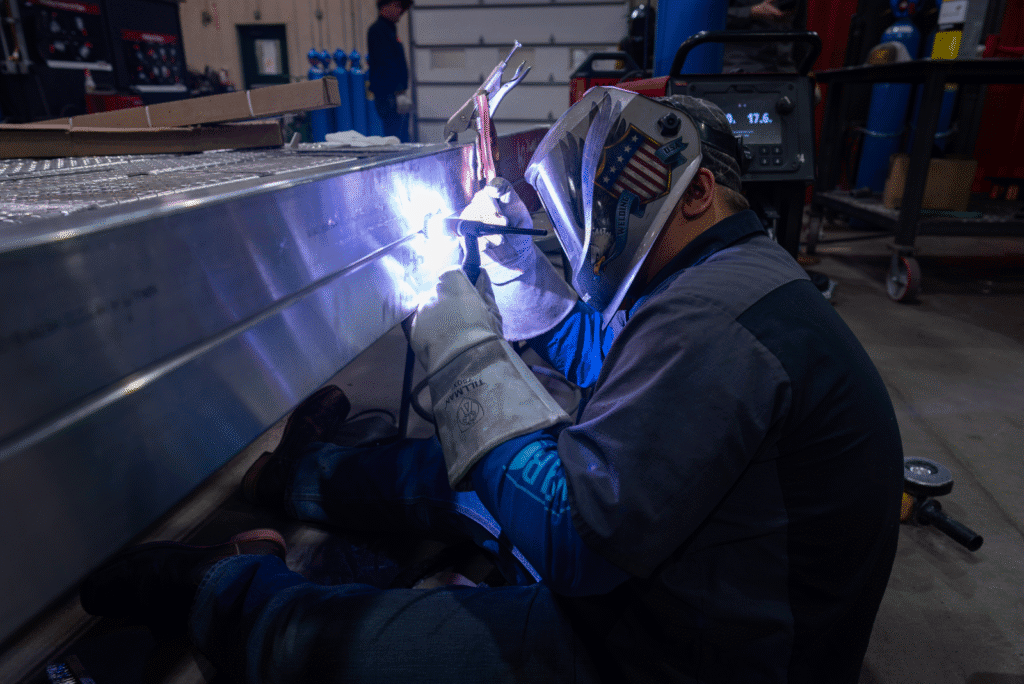
Why Choose Welding as a Career?
The welding industry is booming. From constructing bridges and skyscrapers to maintaining pipelines, vehicles, and ships, skilled welders are essential to nearly every sector that relies on metal fabrication.
Apart from being a rewarding career, welding is a versatile, portable skill set that allows you to work in manufacturing, construction, energy, transportation, aeronautics, and more. With the right training, you can start a welding career that fits your interests and lifestyle.
Common Misconceptions About Welding
Welding is a trade full of opportunity, but it also comes with a few misconceptions. Let’s clear some of them up so you can see what a welding career really looks like.
Myth 1: You need years of experience to get a good job
Some people think you have to spend years “learning on the job” before landing a solid welding position. With proper training, that’s just not true.
WyoTech’s Applied Welding Technology program is designed to get you hands-on experience fast and ready for a welding career in just months. Employers care about skills, dedication, attendance, attitude, and work ethic. WyoTech embraces these values, and we work hard to instill and reinforce these values in our students.
Myth 2: Welding is only for construction
Construction is just one of many paths for welders. Skilled welders are needed in shipbuilding, pipelines, aerospace, heavy equipment, automotive, and even artistic or custom fabrication. Learning a variety of techniques (MIG, TIG, Stick, and pipe welding) gives you the flexibility to take your skills wherever you want.
Welding isn’t a one-size-fits-all career; it’s a craft with options.
Myth 3: Welding is only for men
More and more women are joining the field and doing incredible work in fabrication, pipelines, shipyards, and more. At WyoTech, we welcome anyone ready to roll up their sleeves and learn. If you’ve got the drive to practice, problem-solve, and perfect your craft, welding is for you.
Myth 4: Welding is dangerous and unsafe
Welding does involve heat, sparks, and heavy metal, but with proper training, it’s far from reckless. At WyoTech, students learn safety first: how to use protective gear, handle machines correctly, and follow industry-standard safety practices.
Learning good habits early keeps you safe and confident on the job.
Welding is challenging, rewarding, and more accessible than a lot of people realize. With the right training and hands-on experience, you can start a career that’s high in demand, pays well, and opens doors to work almost anywhere, regardless of your background or prior experience.
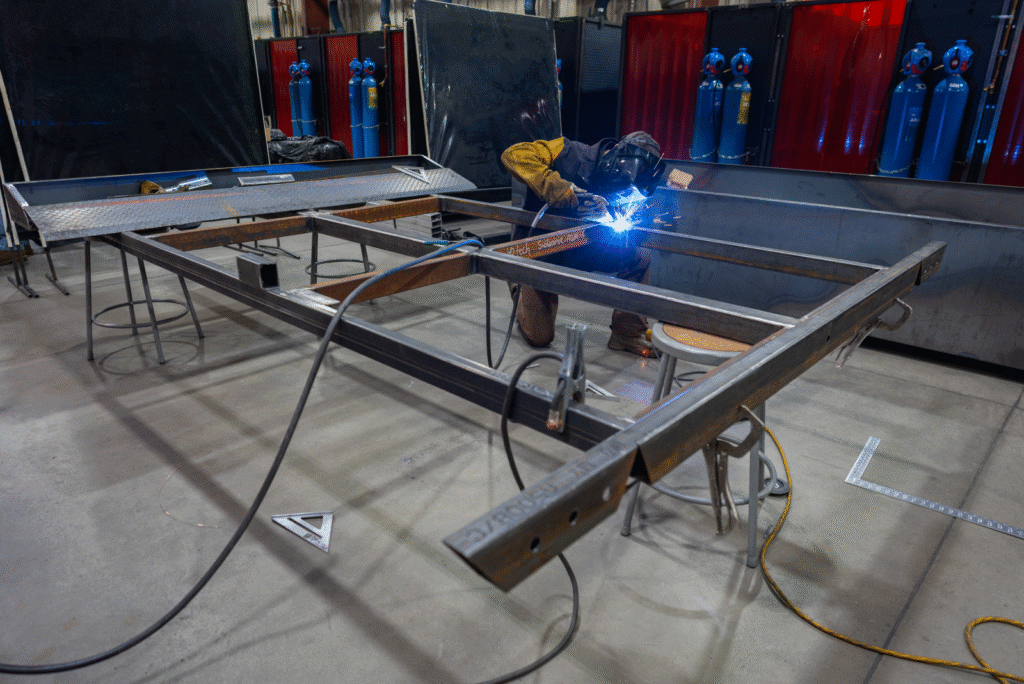
Hands-On Welding Training at WyoTech
WyoTech’s Applied Welding Technology program is designed to give you practical, real-world skills. Around 70% of the program involves hands-on work in the shop, giving you the experience you need to graduate confidently and step directly into the workforce.
In just six months, students move through project-based training that covers multiple welding methods, fabrication techniques, blueprint reading, metallurgy, and more.
Our curriculum is built with input from top industry professionals and follows standards from respected organizations like the American Welding Society (AWS), American Society of Mechanical Engineers (ASME), and American Petroleum Institute (API).
Common Types of Welding
Here’s a closer look at the welding techniques you’ll learn in WyoTech’s program, along with their applications and benefits:
1. MIG Welding (Gas Metal Arc Welding – GMAW)
MIG welding is one of the most popular methods for beginners and professionals alike. It uses a continuous wire electrode and a shielding gas to produce clean, strong welds.
- Applications: Automotive, construction, manufacturing, and shipbuilding
- Benefits: Fast welding speeds, easier to learn, produces clean welds with minimal cleanup
- Career relevance: MIG welding is highly versatile and widely used, making it a key skill for entry-level and advanced welding positions
2. TIG Welding (Gas Tungsten Arc Welding – GTAW)
TIG welding is a precise welding technique using a non-consumable tungsten electrode and filler metal. It’s ideal for detailed, high-quality, clean work.
- Applications: Aerospace, automotive restoration, pipelines, food industry, medical, and high-end fabrication
- Benefits: Offers precise control over the weld, very clean applications, suitable for thin or exotic metals, and critical applications
- Career relevance: TIG welding is essential for specialized roles where precision and finish are critical, opening doors to specialized welding applications such as food or medical grade stainless steel welding to advanced fabrication and welding on exotic metals in the aerospace industry, and everywhere in between.
3. Stick Welding (Shielded Metal Arc Welding – SMAW)
Stick welding is a traditional method using a consumable electrode coated in flux. It’s often used in outdoor or challenging environments.
- Applications: Construction, pipelines, heavy equipment, and shipyards
- Benefits: Can be used outdoors, effective on thick metals, requires minimal equipment
- Career relevance: Stick welding is a fundamental skill for industrial and field-based welding roles, including pipeline welding, industrial and construction maintenance, and mobile repair services.
4. Flux Core Arc Welding (FCAW)
Flux Core Arc Welding is similar to MIG but uses a flux-filled wire, allowing it to work well outdoors without shielding gas.
- Applications: Heavy equipment repair, construction, and structural welding
- Benefits: Works in windy conditions, suitable for thicker metals, and high deposition rates
- Career relevance: Flux Core welding is highly practical for fieldwork and industrial projects
5. Oxyfuel and Plasma Cutting
Oxyfuel and plasma cutting techniques are essential skills to have in any metalworking industry. These cutting processes are used in new construction and repair work to cut, shape, and bend metal to fit the needs of the specific application. Oxyfuel cutting uses a hot flame and high-pressure oxygen to heat the metal to bend or pierce for cutting applications, while plasma cutting uses an electric arc to heat the metal and a high-velocity jet of air to pierce through the metal to make a cut.
- Applications: Fabrication, pipeline construction, repair work, and manufacturing
- Benefits: Efficient, precise, and versatile
- Career relevance: Understanding cutting methods improves fabrication skills and prepares you for complex projects
What You’ll Learn in WyoTech’s Welding Program
WyoTech’s Applied Welding Technology program is structured into four intensive six-week phases:
- Welding Basics: Learn shop safety, PPE, blueprint reading, and an introduction to MIG, Flux Core, Stick, and oxyfuel cutting.
- Advanced Shielded Metal Arc Welding & TIG Introduction: Develop out-of-position stick welding skills and begin working with TIG.
- Advanced TIG & Pipe Welding: TIG stainless steel and aluminum, learn pipe welding across multiple positions, and understand industry codes.
- Advanced Pipe, Metal Fabrication & Economics: Advance in pipe welding to heavier-walled pipe and smaller diameter pipe, work start to finish on a group or individual fabrication capstone project, refine fabrication skills, and learn the business side of welding.
By the end of the program, students learn welding skills in MIG, FCAW, TIG, stick, pipe, and fabrication processes, gaining hands-on experience and confidence to start a welding career anywhere in the world.
Welding Career Paths
The skills you acquire at WyoTech can lead to a variety of welding career paths:
- Structural Welder: Work on bridges, buildings, and infrastructure
- Pipe Welder: Specialize in pipelines for oil, gas, and industrial applications
- Fabrication Welder: Build custom metal components and machinery
- Shipyard Welder: Join teams building or maintaining ships, military, and marine equipment
- Maintenance Welder: Repair and maintain equipment in factories, mines, construction, and plants
Each of these paths requires a mix of techniques like MIG, FCAW, TIG, and Stick welding, all taught at WyoTech.
Why WyoTech Stands Out
When considering the best welding schools, WyoTech distinguishes itself with:
- Project-based, hands-on training: Learn by doing, not just watching
- Industry-standard curriculum: Courses designed by professionals and aligned with AWS, ASME, and API standards
- Career support: Assistance with job placement and industry connections
- Flexible scheduling: Classes during day and night hours to prepare you for trade shifts
WyoTech gives you the skills and experience to enter the workforce immediately, whether you’re interested in fabrication, heavy equipment, pipelines, or any other welding career path.
Start Your Welding Career Today
With high demand for qualified welders, a competitive salary, and the ability to work almost anywhere, welding is a career that offers stability, mobility, and satisfaction. WyoTech’s Applied Welding Technology program provides the training, certification preparation, and hands-on experience to help you launch your welding career with confidence.
If you’re ready to explore welding programs and gain practical skills in MIG, TIG, Stick, and more, we’re here to guide you every step of the way.
Your future in welding starts now.